Improving sleep care in breast cancer patients
Breast cancer patients undergoing treatment often experience significant sleep disturbances due to pain, anxiety, and side-effects of therapy. Poor sleep not only affects their overall wellbeing but also impairs their ability to cope with treatment. Sleep care is an important component of holistic care. Brief screening followed by a comprehensive assessment of those patients who screen positive is necessary to determine the appropriate treatment to improve their sleep.
Wen-Chun Liao is a faculty member working in the School of Nursing at China Medical University and Chia-Wen Chuang is a nurse educator working in the Department of Nursing of Breast Surgery at the Kaohsiung Chang Gung Memorial Hospital. In these roles, they work closely with nursing staff and the healthcare team to provide evidence-based care in improving the health of breast cancer patients undergoing chemo-radiotherapy.
Background
Over the last 20 years, the prevalence of sleep disturbances in breast cancer patients has remained approximately 14%–93% worldwide, with a higher prevalence of poor sleep occurring in breast cancer patients during treatment. In Taiwan, 67% of breast cancer patients reportedly experience sleep disturbances.
In 2023, 73% of nurses in the Department of Nursing of Breast Surgery at the Kaohsiung Chang Gung Memorial Hospital in Taiwan reported screening patients. However, no patient-related sleep problems were documented in the nursing records, and no sleep care was provided. After investigation, we found that 29% of breast cancer patients were not screened for sleep issues, and none had undergone a sleep assessment. Standardised care protocols for breast cancer patients had been developed, but they did not include specific information on sleep care. Consequently, sleep disturbances in cancer patients needed to be addressed through the development of a dedicated sleep protocol.
To support the initiative, Wen-Chun and Chia-Wen participated in the JBI Evidence Implementation Training Program at the Taiwan Evidence Based Practice Centre. Through this program, they learned about evidence-based healthcare and developed the skills and knowledge necessary to lead practice change at Kaohsiung Chang Gung Memorial Hospital.
As part of the training program, Wen-Chun and Chia-Wen conducted an evidence implementation project that focused on care for breast cancer patients with sleep disturbances. The project sought to improve the screening, assessment, and management of sleep quality in breast cancer patients undergoing treatment. Wen-Chun shared, “It is hard to make changes. However, by following the JBI Evidence Implementation Framework step by step, we did it!” said Chia-Wen.
Sleep disturbance care process: Implementing evidence into practice
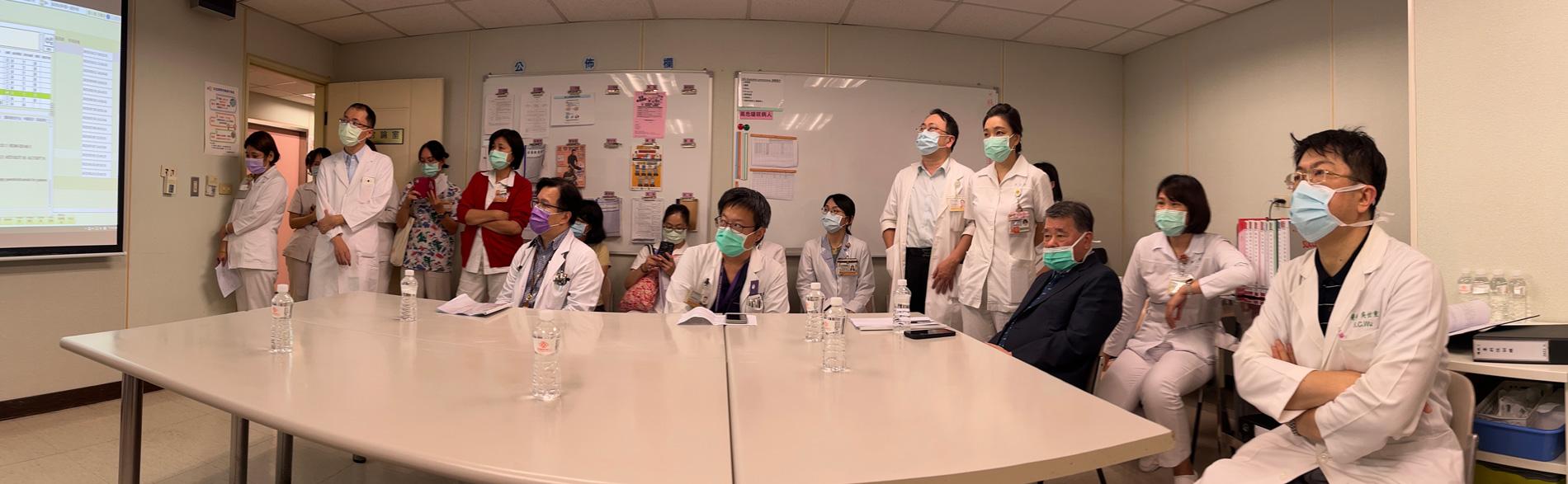
The 'Sleep Disturbance Care Process' was established in a general surgery ward with 57 beds and 30 nursing staff in a medical centre in southern Taiwan. Wen-Chun and Chia-Wen held an initial meeting to establish the project team and check the existing care process for sleep problems in breast cancer patients. The coordinating group, including nurse leaders (director, deputy director of the nursing department, and the nursing supervisor), a case manager, physicians, head nurses, and nurse specialists, were invited to participate. The team were enthusiastic about working together with the aim of implementing best practices for the screening, comprehensive assessment, and management of sleep disturbances in breast cancer patients.
Before the project started, sleep problems were screened using two questions:
“Did the patient experience difficulty in sleeping, such as difficulty falling asleep, waking up easily, or early?” and “Did the patient lose much sleep through worry?”
These questions were part of the initial nursing assessment in the Health Information System, which is the electronic medical care system used in the hospital. Each patient was screened upon admission. However, previously there had been no follow-up with a care plan to address sleep problems.
Through project team meetings, a care process was established regarding screening patients and providing a comprehensive sleep assessment if they experienced poor sleep. The care process also addressed how to manage poor sleep through tailored interventions, by whom, when, how, and where. The protocol was established, as shown below, and consensus was reached among all healthcare teams.

Based on staff feedback, Wen-Chun and Chia-Wen developed resources for patients and healthcare practitioners, including handouts, assessment tools, and an educational video to increase knowledge and improve the adoption of the Sleep Disturbance Care Process. These interventions helped nurses and case managers gain awareness of the sleep care process for breast cancer patients. As a result, physicians focused on patients’ sleep, diagnosed and treated patients' sleep disturbances, and provided professional medical advice and pharmacological treatment plans. Nursing staff knew when and how to actively communicate with the care team about patients’ sleep problems.
Barriers and facilitators
Although nurses routinely asked two basic questions about sleep during the initial nursing assessment, there was no comprehensive follow-up assessment or structured care plan in place. Moreover, there was a general lack of awareness among nurses regarding how to assess and manage sleep disturbances in breast cancer patients. As a result, sleep issues were often overlooked or underestimated in daily practice.
“The GRiP method was useful in guiding us to identify issues, develop strategies, and think about the resources we had and the outcomes that were important and practical in the implementation process,” explained Wen-Chun. “It also reminded us to collaborate with staff rather than simply directing them to follow,” noted Chia-Wen.
Thus, a survey was conducted to better understand the needs of frontline staff. Of the participating nurses, 72% expressed interest in learning more about sleep assessment, while 76% wanted to know more about sleep management. Importantly, 84.2% of nurses considered education on the impact of chemotherapy on sleep as "very important." This strong response from the clinical nurses was a powerful facilitator of the project.
Consequently, the entire interdisciplinary team collaborated not only to co-develop a Standardised Sleep Disturbance Care Process, but also to implement targeted training led by a sleep specialist nurse. The training was designed for key nurses and case managers, equipping them with knowledge and tools to drive meaningful, widespread change in clinical practice.
Kaohsiung Chang Gung Memorial Sleep Disturbance Care
 |  |
Achieving impact through evidence-based change
Through targeted training and collaboration to implement the Standardised Sleep Disturbance Care Process, nurses achieved a 100% compliance rate in conducting comprehensive sleep assessments for breast cancer patients (as shown in the graph below). This transformed a previous gap in care into a source of pride and tangible improvement. The percentage of patients receiving personalised sleep hygiene counselling increased dramatically from 0% to 83%, reflecting nurses' commitment to a holistic, patient-centred approach that addressed key aspects of patient recovery. Nurses reflected, "I know how to assess patients’ sleep comprehensively”, and “I understood my patients more and provided in-depth care ... I enjoy the caring process.”
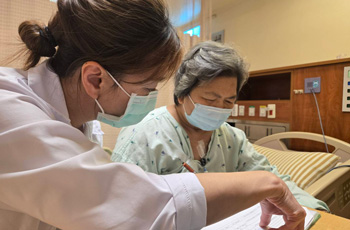
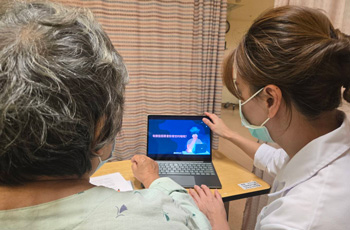
Demonstrating their enthusiasm for the project, the nursing team led the development of a sleep education video for patients, aiming to enhance understanding and management of sleep disturbances. This video is now regularly used at the bedside to facilitate consistent communication and empower patients with valuable information. These efforts underscore the profound impact of integrating evidence-based practices and proactive nursing initiatives into patient care. A patient commented, “I knew that taking sleeping pills was not the only method to solve my sleep problems … I now can ask for help and get help from others.”

Sustainability of the Sleep Disturbance Care Process
To ensure the long-term sustainability of the Sleep Disturbance Care Process, it was crucial to embed sleep screening, assessment, and management into daily clinical routines. Despite improved adherence to best practices, time constraints remained a challenge. To address this problem, the project team is developing a digital platform, potentially powered by AI, to streamline screening, data analysis, and clinical decision-making, thereby reducing staff workload and enhance assessment quality.
Sustainability also depends on continuous staff education, leadership support, and audits. Nurses' involvement in producing patient education videos reflects strong engagement and ownership. Looking ahead, a pilot of the digital Sleep Disturbance Care Process is planned to assess usability and gather feedback from nursing staff. We aim to sustain and expand the impact of the Sleep Disturbance Care Process across wards and institutions, ensuring continued benefits for patients with breast cancer.
Scalability
The Sleep Disturbance Care Process is a structured and adaptable model suitable for other oncology wards and departments. Its core elements—screening, comprehensive assessment, and individualised interventions—can be tailored to various clinical settings. To scale the model, integration into hospital-wide digital systems and shared educational resources is key. With institutional support, the Sleep Disturbance Care Process can evolve into a scalable framework for improving sleep care across healthcare settings.
Conclusion
Addressing sleep disturbance may not be a priority during busy clinical care. However, based on its high prevalence and associated adverse outcomes, the implementation of sleep care is important and needed. The Sleep Disturbance Care Process—including screening, comprehensive assessment, and individualised interventions—is a model that can be adapted for other oncology wards and departments. In the future, using AI to conduct assessments may prove an effective substitute for manual evaluation in a busy clinical environment.
Key takeaways
- Sleep disturbance is often under-recognised in breast cancer care, yet it is critical to patients’ wellbeing.
- Implementing the Sleep Disturbance Care Process significantly improved nurses’ compliance with best practices.
- Nurse-led efforts and interdisciplinary collaboration were key to the project’s success. AI may help scale solutions in high-demand environments.
References
1. Leysen L, Lahousse A, Nijs J, Adriaenssens N, Mairesse O, Ivakhnov S, et al. Prevalence and risk factors of sleep disturbances in breast cancer survivors: systematic review and meta-analyses. Support Care Cancer 2019;27:4401–33.
2. Weng YP, Hong RM, Chen VCH, Tsai CJ, Yeh DC, Fang YH. Sleep quality and related factors in patients with breast cancer: a cross-sectional study in Taiwan. Cancer Manage Res 2021;2021:4725–33.
3. Chuang CW, Li CF, Chiang MC, Wu SC, Li YF, Liu SC, et al. Care process for breast cancer patients with sleep disturbances: a best practice implementation project. JBI Evid Implement 2026;24(1):90–102.
To link to this article - DOI: https://doi.org/10.46658/JBIIM-25-02
Authors
Wen-Chun Liao, RN, PhD
Chia-Wen Chuang, RN, MS
Heather McCulloch, BA(Hons), GradDipComms(PR), MBA