Building a Sustainable Framework for Systematic Review Training in Japan
In August 2010, the JBI Japan Centre for Evidence-Based Practice (JCEBP) was established at Osaka University as the first JBI Affiliated Centre in Japan. At that time, while the concept of systematic reviews had begun to gain some recognition, their methodology and academic significance was not yet widely understood or adopted within the Japanese academic community. This article outlines the context in which systematic reviews were introduced in Japan.
Background: The landscape of evidence-based practice in Japan
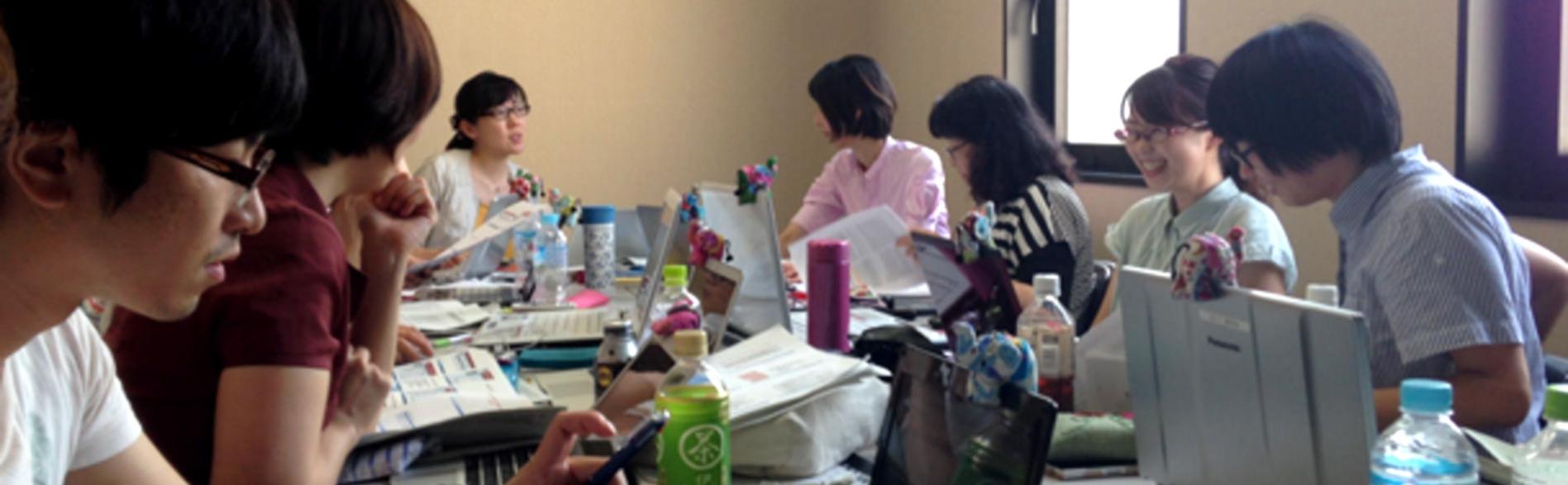
At the time of JCEBP’s establishment, primary research was the standard for academic achievement in Japan, while systematic reviews outside the Cochrane Library were often undervalued. There was a limited understanding of systematic reviews among nursing researchers, and few related publications existed. In response, JCEBP launched outreach efforts to highlight the importance of systematic reviews and the JBI Model of Evidence-based Healthcare, including seminars, evidence summary translations, and presentations at academic conferences in Japan (Figure 1).
However, the absence of qualified trainers in Japan who could guide researchers in conducting systematic reviews presented a major barrier. Therefore, increasing the number of individuals capable of conducting systematic reviews became a central mission for JCEBP. JCEBP invited a trainer from the Thailand Centre for Evidence-Based Health Care to conduct the Comprehensive Systematic Review Training Program (CSRTP) in 2014. This program provided Japan’s first structured and hands-on opportunity to learn about systematic reviews and how to conduct them in detail (Figure 2).
Turning Point: EBP in Japan
Supported by JCEBP’s training and mentorship model, Shingo Ueki was among the first cohort to translate learning into publication. His participation in the program represented an important step in both his professional development and the implementation of evidence-based practice in Japan. Motivated by the training and mentorship he received, Shingo committed to mastering the methodology of systematic reviews, and applying the evidence from systematic reviews in clinical practice. In 2019, he published a systematic review in JBI Evidence Synthesis, the first such publication from Japanese JBI centres. The following year, Shingo completed the JBI trainer accreditation program and became the third JBI certified CSRTP trainer in Japan. His published review was subsequently adopted as a model example in Module 2 of the CSRTP, a testament to its academic rigour, structure, and clarity.
Shingo reflects that his involvement with systematic reviews and evidence-based practice developed organically through his experiences at JCEBP: “I simply followed the encouragement and guidance of the center director, and that path has led me to where I am today. The experience at JCEBP significantly strengthened my research knowledge and skills. I feel a strong sense of responsibility to share what I’ve learned with others—not only to support future learners but also out of gratitude to the center director and the trainer from the Thailand Centre who guided me early on.”
JCEBP fosters individual excellence in a collaborative environment. Shingo's colleague Yuta, a core member of JCEBP, has published two systematic reviews and currently serves as an Associate Editor for JBI Evidence Synthesis. He was recently recognised as an Outstanding Peer Reviewer. The JCEBP plays a key role in connecting individuals and creating a community where members inspire and elevate one another.
Training and Mentorship
Since becoming a certified trainer, Shingo has actively contributed to CSRTP delivery in Japan. In 2021, he independently led a CSRTP with five participants, where the Q&A sessions were held in Japanese. This helped to enhance participant engagement and understanding. Shingo has continued to serve as a key trainer in regular CSRTP offerings.
However, Shingo’s leadership extends beyond program delivery. He provides personalised follow-up and detailed feedback to his trainees as they advance towards the publication of their systematic reviews. Moreover, he regularly organises introductory seminars on systematic review methodology, increasing awareness and participation in the CSRTP.
Under his mentorship, several researchers who participated in his CSRTP have successfully published in JBI Evidence Synthesis, including one full systematic review and two accepted protocols. Many other mentees continue to make meaningful progress under his guidance. His mentorship supports individual academic growth and helps raise the overall standard of systematic reviews produced in Japan.
Dissemination and Outreach
Beyond training, Shingo has contributed as a core member of JCEBP to public education and clinical practice by authoring a book––a translated version of the JBI’s Best Practice information––accompanied by guidance on its application in clinical settings. He has further expanded outreach by producing and publicly sharing educational YouTube videos and blogs on research methodology and the role of evidence, helping a broader audience deepen their understanding of evidence-based practice.
Broader Impact and Sustainability
Personal growth is greatly influenced by an individual’s environment. The broader environment fostered by JCEBP has played a key role in sustaining engagement in evidence-based practice. The director of JCEBP established the centre as a legal entity and formalised the operation of CSRTP. This organisational change allowed for streamlined management of speaker honoraria and tax processes, contributing to the stable and sustainable delivery of the CSRTP in Japan.
Shingo’s progression from a CSRTP trainee to a trainer and mentor reflects the sustainable development model envisioned by JCEBP. His contributions have helped institutionalise systematic reviews in Japan and expand a community of researchers contributing to global evidence synthesis efforts. Currently, with its four certified trainers, JCEBP runs the CSRTP twice annually. The rotation of trainers ensures consistency in quality while also building depth and resilience within the program. This sustainable structure enables JCEBP to continue capacity-building independently. As more researchers publish systematic reviews in Japan, a shift in academic recognition of their value and importance is emerging.
Conclusion
JCEBP has not only enriched Japan’s academic and clinical research landscape but also served as a bridge, inspiring the next generation of researchers and trainers. Over the past 15 years, JCEBP has played a critical role in introducing and promoting systematic reviews in Japan. The continued efforts of individuals such as Shingo have helped translate these goals into concrete outcomes. His journey demonstrates the far-reaching power of mentorship, rigorous training, and sustained commitment. JCEBP will continue to nurture globally minded leaders, advancing the quality and reach of evidence-based practice in Japan.
Key Take-Home Messages
The implementation of sustainable systematic review training requires individual advancement and strong support from the organisation.
Contextualised teaching in local languages is critical for understanding systematic reviews to promote evidence-based practice.
Building local capacity for systematic review training ensures sustainability and independence.
Additional resources
Fujitsuka, M., Takao, K., Ueki, S., & Morokuma, S. (2025). Early introduction of oral feeding and its impact on full oral feeding and discharge in preterm infants: a systematic review protocol. JBI Evidence Synthesis, 23(2), 379-385. https://doi.org/10.11124/JBIES-24-00169
JBI Comprehensive Systematic Review Training Program. JBI. Available from: https://jbi.global/education/systematic-review-training
JBI Japan Centre for Evidence Based Practice: A JBI Centre of Excellence. Available from: https://jbi.global/global-networks/collaboration/jbc_entity?collaborator_id=177
JBI Model of Evidence-based Healthcare. Available from: https://jbi.global/jbi-model-of-EBHC
Koto, Y., Ueki, S., Yamakawa, M., & Sakai, N. (2022). Experiences of patients with lysosomal storage disorders who are receiving enzyme-replacement therapy and the experiences of their family members: a qualitative systematic review. JBI Evidence Synthesis, 20(6), 1474-1510. https://doi.org/10.11124/JBIES-21-00074
Koto, Y., Ueki, S., Yamakawa, M., & Sakai, N. (2024). Experiences of patients with metachromatic leukodystrophy, adrenoleukodystrophy, or Krabbe disease and the experiences of their family members: a qualitative systematic review. JBI Evidence Synthesis, 22(7), 1262-1302. https://doi.org/10.11124/JBIES-23-00303
Nishida, N., Maeda, Y., & Ueki. S. (2024). Experiences of school-age children living with food allergies: a qualitative systematic review protocol. JBI Evidence Synthesis, 22(9), 1866-1874. https://doi.org/10.11124/JBIES-23-00428
Ooshige, N., Matsunaka, E., Ueki, S., & Takuma, S. (2024). Pregnant nurses' experiences of working shifts: a qualitative systematic review. JBI Evidence Synthesis. 22(11), 2313-2341. https://doi.org/10.11124/JBIES-23-00184
Ueki, S., Yamagami, Y., & Makimoto, K. (2019). Effectiveness of vibratory stimulation on needle-related procedural pain in children: a systematic review. JBI Database of Systematic Reviews and Implementation Reports, 17(7), 1428-1463. https://doi.org/10.11124/JBISRIR-2017-003890
Ueki, S., & Yamakawa, M. (Eds.). (2022). JBI: Recommended nursing practices: Applying international evidence in clinical settings. Tokyo, Japan: Japanese Nursing Association Publishing Company.
The Thailand Centre for Evidence Based Health Care: A JBI Centre of Excellence. Available from: https://jbi.global/global-networks/collaboration/jbc_entity?collaborator_id=218
To link to this article - DOI: https://doi.org/10.46658/JBIIM-25-03
Author
Shingo Ueki1,2
- JBI Japan Centre for Evidence-Based Practice, Suita, Osaka, Japan
- Faculty of Medical Sciences, Department of Health Sciences, Kyushu University, Fukuoka, Japan