
When paramedics don't transport
A scoping review protocol, a challenge, and a reply
A scoping review protocol to map non-conveyance decisions draws scholarly exchange which sharpens the questions that need answers.
Ambulance services are under sustained pressure. Demand for emergency care is rising globally, driven by growing and ageing populations, while hospital infrastructure, particularly inpatient bed capacity, has not expanded proportionately to meet it.
In Australia alone, emergency department presentations increased from 8.02 million in 2017 to 18 to 8.79 million in 2021–22, with around a quarter arriving by ambulance. Evidence suggests many of these presentations are low in clinical acuity and may be better served outside the emergency department altogether.
It is in this context that non-transport is becoming more common. Non-transport is defined as ambulance deployment to a patient who, following assessment and/or treatment by medical personnel such as paramedics, is not conveyed to a medical facility. An international systematic review from 2017 reported rates ranging from 3.7% to 93.7%. That breadth, accompanied in the broader literature by heterogeneity in outcome measures and variation in the duration of follow-up, points to significant inconsistencies in how the practice is studied and reported.
An underexamined decision with significant consequences
The decision not to transport is rarely straightforward. Paramedics must assess patient safety under conditions that are frequently resource-poor, time-challenged, and information-sparse. Presentations that appear low in acuity may carry underlying comorbidities, atypical features, social determinants of health, limited access to patient history, or unpredictable care needs, any of which can complicate the clinical picture considerably.
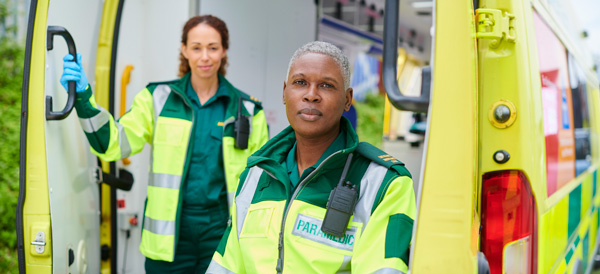
Non-transport may be paramedic-initiated, patient-initiated, or otherwise initiated, including decisions that are shared, mutually agreed, or reached in opposition. The source literature notes that many paramedics are uncomfortable not transporting a patient to hospital when the patient requests conveyance, regardless of perceived need.
Transporting patients to the emergency department as a precautionary measure has, in some paramedic cultures, become a form of defensive practice, despite growing awareness that iatrogenic harm can exist for these vulnerable populations.
The scoping review currently underway aims to map what the existing literature establishes across three distinct domains: the characteristics and demographics of patients who are not transported following paramedic care; the outcome measures used to assess what happens to those patients; and the factors that shape paramedic decision-making at the point of care.
Drawing maps in the fog
The scoping review protocol attracted a letter to the editor from researchers in Italian emergency medicine and critical care, who welcomed the work while pressing on two methodological points. They argued that non-transport may represent a transfer of risk across sectors rather than its resolution, and that without predefined safety windows, outcome comparisons across studies risk remaining descriptive rather than clinically transformative. The researchers also challenged the decision not to undertake quality appraisal of included sources: when patient safety is the subject, mapping evidence without contextualising methodological robustness risks equating signal with noise.
The authors respond
The authors of the protocol responded directly and without deflection. On the question of quality appraisal, they acknowledged the concern while holding their methodological position: the objective of the scoping review is to map the extent, range, and nature of research on paramedic non-transport, not to synthesise effect estimates or inform direct practice recommendations.
The authors found more common ground on the question of decision-making culture. They noted apparent success with non-transport practices in several Western European countries which, despite the absence of consensus on outcome measures, have nonetheless fostered environments in which paramedics feel empowered to make non-transport decisions. Across that literature, recurrent themes include trust, patient report, organisational support, resource availability, and paramedic experience.
This convergence led to what the authors described as a shift in the central question of non-transport policy and practice, from "Who is safe to leave at home?" toward "Which conditions allow for safe non-transport practices?" That shift, they argued, makes possible a more authentic, patient-centred approach underpinned by patient safety, and may represent the penultimate question for contemporary non-transport policy.
What this exchange contributes
What the correspondence makes plain is how much depends on what the mapping reveals, and how carefully its descriptive findings will need to be contextualised before they can inform the structural and clinical questions that practitioners and health systems are already trying to answer.
The full scoping review protocol, Non-transport of patients following assessment and care by paramedics: a scoping review protocol, is available in the May 2026 issue of JBI Evidence Synthesis.
The scholarly exchange in full, in the letters Drawing maps in the fog: rethinking safety and system context in paramedic non-transport, and the authors’ response, is also available in the May 2026 issue of JBI Evidence Synthesis