
New JBI Collaborating Entity strengthens evidence and genomics in Nigeria
Bringing African evidence into global healthcare conversations through research and innovation
The JBI Collaboration (JBIC) continues to expand its global network through partnerships that strengthen evidence-informed healthcare in regions facing complex and evolving health challenges. The establishment of the JBI Nigerian Evidence-Based Healthcare and Genomics Center marks a significant milestone for both Nigeria and the wider West African region. Hosted within the Floret Center for Advanced Genomics and Bioinformatics Research, the new Centre is the first JBIC Entity in Nigeria.
Advancing JBI’s vision through innovation and collaboration
The Centre was conceived as a pioneering platform to strengthen evidence-based healthcare (EBHC)— closely aligning with JBI’s mission—aiming to integrate computational life sciences with EBHC. This interdisciplinary approach creates opportunities to expand evidence synthesis and implementation into emerging areas such as precision medicine, pathogen genomics and digital health.
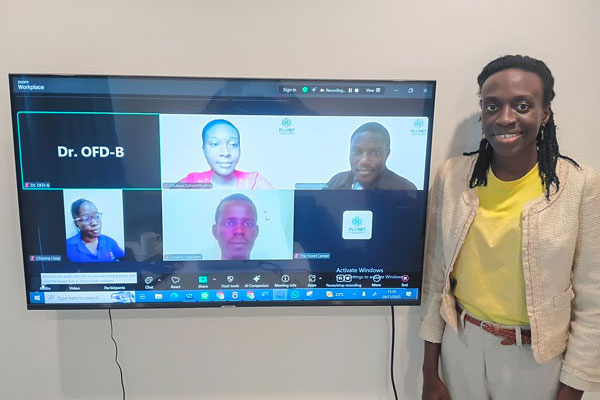
“Our collaboration with JBI is more than a partnership—it is a shared commitment to ensuring that data, evidence, and genomic science work hand in hand to inform practice and improve lives. Partnering with JBI strengthens our commitment to ensuring that discoveries in genomics and data science translate into evidence-informed policies and equitable healthcare outcomes across Nigeria and other low-resourced settings,” says Dr Olabisi Flora Davies-Bolorunduro, director of the new entity.
Current healthcare challenges in Nigeria and West Africa
Nigeria faces a dual burden of infectious and non-communicable diseases, alongside ongoing health disparities, underinvestment in research, and fragmented knowledge translation. The World Health Organization (WHO) continues to identify infectious diseases as a major health challenge across the African region, particularly where clinical and policy decisions are still made without access to high-quality synthesised evidence. Researchers, clinicians and policymakers often work in silos, highlighting the need for more coordinated, evidence-informed approaches that better connect research, policy and practice.
In response to these challenges, the WHO has also highlighted the importance of strengthening evidence-informed strategies, surveillance systems and translational research to address infectious diseases and emerging health threats across Africa.
Nigeria’s growing openness to evidence-informed strategies among government agencies, universities and healthcare institutions presents important opportunities for progress. By integrating JBI methodologies with computational biology, the Centre aims to generate locally relevant insights, empower researchers and practitioners, and advance equitable, high-quality healthcare for all.
Integrating genomics and evidence-based healthcare
Through computational biology, genomics and implementation science, the Centre aims to generate evidence that is both scientifically rigorous and locally relevant. This work is particularly important in African contexts, where populations and health systems are often underrepresented in evidence-based discourses. The Centre’s activities will support the development of culturally relevant evidence that reflects African populations, helping JBI advance its vision of globally inclusive healthcare.
The Floret Center’s research portfolio already spans genomics, bioinformatics, molecular medicine, microbiology, infectious diseases, public health and translational research. Its researchers are engaged in frontier areas including tuberculosis genomics, neurodegenerative disease biology, microbiome research, systems biology and computational drug discovery. This breadth of expertise creates a strong interdisciplinary foundation that integrates laboratory science, computational analysis and public health perspectives.
Building future evidence-based healthcare leadership
The Centre upholds the principle that evidence must guide both policy and practice. Its partnership with JBI reflects a shared vision to embed rigorous, evidence-informed approaches into healthcare delivery, training, and decision-making.
The Centre also aims to contribute substantially to capacity building across Nigeria and West Africa. Through initiatives such as the Floret Emerging Scientists Internship Program, researchers receive training, mentorship and career development support. Upcoming programs, focused on mid-career researchers, will further strengthen leadership and research capability.
Looking ahead
Regionally, the Centre aims to serve as a training and mentorship hub for West African institutions through workshops, structured programs and collaborative initiatives that strengthen evidence-based practice among clinicians, researchers and decision-makers. It will also contribute to the global evidence base through systematic and scoping reviews published in JBI Evidence Synthesis and JBI Evidence Implementation, with a focus on high-burden diseases in Nigeria, including tuberculosis, malaria, cancer, and non-communicable diseases.
By combining the Floret Center’s expertise in computational life sciences with JBI’s established EBHC framework and strategic partnerships such as Federal Medical Center (FMC), Bida, the Centre will bring data, perspectives and innovation from an underrepresented region into global healthcare conversations, supporting the JBIC’s commitment to diversity, inclusiveness and global relevance. The establishment of the JBI Nigerian Evidence-Based Healthcare and Genomics Center reflects a broader commitment to ensuring that scientific innovation, evidence synthesis and implementation science are accessible, locally relevant and capable of improving healthcare outcomes across diverse settings.
The JBI Collaboration (JBIC) is a global collaborative evidence network comprising more than 90 Collaborating Entities spanning across 40+ countries. Together, they drive JBI’s global mission to promote and support the use of the best available evidence to inform decisions made at the point of care.