
The Fidelity Dilemma
When sticking to the plan is harder than it sounds
The field of implementation science stands at a crossroads in the debate over fidelity versus adaptability of healthcare interventions. Fidelity, defined as 'the degree to which programs are implemented as intended by the program developers', has traditionally been considered crucial for understanding and achieving optimal outcomes.
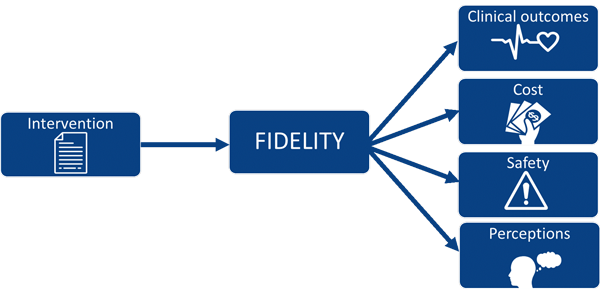
However, the contexts in which healthcare interventions are delivered are dynamic, thus demanding adaptations to fit local needs and resources. This creates a significant challenge - how can we maintain the core elements of an intervention yet still allow for the modifications necessary to fit the context? How can we navigate these crossroads to effectively translate evidence into real-world outcomes?
Intervention fidelity matters not only when conducting research but also when delivering interventions. As a physiotherapist, I recently cared for Mavis (pseudonym), an 82-year-old female admitted to hospital with a hip fracture. She was previously independent, active and cognitively intact. Whilst awaiting surgery, she rested in bed for two days. By the time I helped her mobilise on day one after surgery, she was disoriented, agitated, and frightened - textbook signs that she was now in delirium.
The Australian Commission on Safety and Quality in Health Care’s Delirium Clinical Care Standard recommends interventions to prevent delirium. These include early mobility, sitting out for meals, using hearing and vision aids, optimising hydration and nutrition, regular re-orientation, visible calendars/clocks, quiet environments, limiting ward moves and maximising natural light. Evidence is stronger when multi-component interventions are applied. Easy enough, right? But, as we know, hospitals are complex, unpredictable systems that present new challenges to negotiate every day.
Evidence suggests that delirium prevention guidelines are not always implemented with high degrees of fidelity. Shared rooms are noisy, and ward transfers are necessary. Wall charts can be easily forgotten on a busy day, and patients may request to rest in darkness and refuse care.

The consequences of low fidelity are high for patients, health services and the broader community. In Australia, delirium is estimated to cost $A11 billion per year, is associated with more than three times the risk of mortality, and more than twice the risk of institutionalisation. For Mavis, her functional decline during admission was significant, and ultimately, she was unable to continue living independently, discharging to a residential aged care facility.
So, how can we enhance the fidelity of evidence-based practices such as delirium prevention? The National Institute of Health and Behaviour Change Consortium’s Treatment Fidelity Tool offers practical strategies to enhance fidelity. The tool recommends:
(1) comprehensively describing interventions so that, for example, clinical staff know what to implement and when;
(2) standardising training so that these individuals not only know what to deliver, but feel confident in doing so; and
(3) monitoring the delivery of these interventions at an individual patient level - for example, a daily checklist of prevention appropriate for Mavis.
Understanding context-specific barriers and facilitators enables the development of strategies to support implementation in real-life settings. This systems approach shifts responsibility from the individual and emphasises the healthcare 'ecosystem', where resources, people, processes, policy and culture interact dynamically.
When this environment is understood and nurtured, implementation can adapt, take root and flourish, so perhaps, one day, Mavis’ story will be far less common. More broadly, such an approach may contribute to better patient outcomes across all fields of health.
Authors
Evelyn Sloan
Department of Physiotherapy, School of Health Sciences, The University of Melbourne, Melbourne, Vic, Australia
Dr Marlena Klaic
School of Health Sciences, The University of Melbourne,
Melbourne, Vic, Australia
Professor Catherine Granger
Department of Physiotherapy, School of Health Sciences, The University of Melbourne, Melbourne, Vic, Australia
Associate Professor Selina Parry
Department of Physiotherapy, School of Health Sciences, The University of Melbourne, Melbourne, Vic, Australia
Associate Professor Camille Short
Melbourne Centre for Behaviour Change, School of Psychological Sciences, The University of Melbourne, Melbourne, Vic, Australia